Yeah, there’s The Haunting obviously, which is an incredibly frightening film, so I did dare to look at that again before making this. Then there’s The Innocents - Joanna Hogg, letterboxd.com
The Innocents / The Eternal Daughter
Because I can’t stop thinking about The Eternal Daughter, I had to squeeze out one more post on it...
I came across a recent interviewwith Joanna Hogg & Tilda Swinton on Rogerebert.com that inspired this post
The Innocents, of course. One of the things that The Innocents has a very uninhibited use of dry ice, which encourages that outside on the lake with the images, and there's something very no holds barred about that - Tilda Swinton, Robertebert.com
with Jovan Ajder, the sound designer, we listened to "The Innocents." We watched it, but really listened to the soundtrack of that and how the sounds are very unnatural, in a way, and very, very, very present - Joanna Hogg, Rogerebert.com
So…in keeping with the theme of gothic physiological ghost stories rubbing off on Joanna Hogg’s latest masterpiece (click here to read my last post)- below is a quick visual exploration on the influence of Jack Clayton’s The Innocents on The Eternal Daughter
Because you had discussed certain aspects of this. You told me a gothic film, and immediately I thought of two pictures: The Innocents (1961), of course, and The Haunting (1963). Again, these things are 50 or 60 years old. Doesn’t matter. These things seem to not age in any way, both those films, and particularly The Innocents. But I felt that what you should be aware of was not only M.R. James, the literature, the casting the runes and that sort of thing, but Night of the Demon, Tourneur’s film, is so unique in that it’s made by a man who actually believed in the supernatural - Martin Scorsese, Metrograph.com
Now that the year has basically come to an end I can safely say that Joanna Hogg’s Eternal Daughter is one of my favorite films of the year (along with Crimes Of The Future, Brainwashed & The Banshees Of Inisherin).
I posted my initial thoughts a few months ago (click here to read) but the film has stayed with me since October (something I can't say about the majority of the stuff I've seen this year).
Joanna Hogg has been very open about her influences (Night Of The Demon, The Shining, the films of Chantal Akerman etc). We looked at a lot of these influences in my original review but Hogg's love for Robert Wise’s The Haunting really shows more than any other film in my opinion.
there's The Haunting, obviously, which is an incredibly frightening film, so I did dare to look at that again before making this - Joanna Hogg, letterboxd
The Eternal Daughter has been categorized by some as a horror film when it's really a ghost story. There are horror films and there are ghost stories. Often times the two have a venn diagram-like crossover but not in the case of The Eternal Daughter. This is a ghost story. I guess if you want to categorize this as a horror story then it’s a horror story without any of the jump scares (or any traditional scares for that matter).
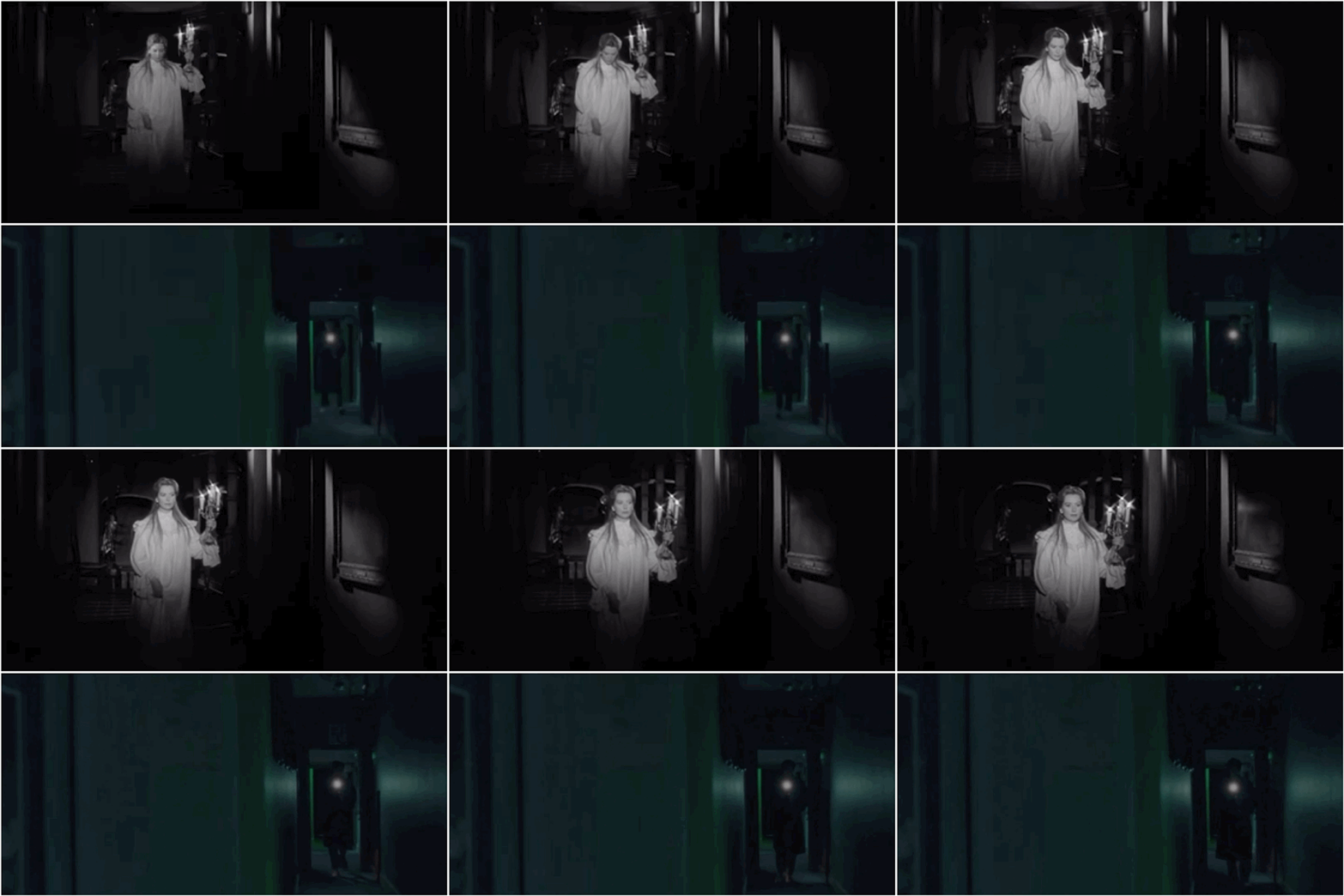
The Haunting / The Eternal Daughter
Visually, The Eternal Daughter is like The Haunting without any of those chaotic moments. From the opening scenes in both films where we travel to the haunted inn right up until check in…
The Haunting / The Eternal Daughter
The Haunting / The Eternal Daughter
Throughout the film there are many quick nods to Wise’s horror classic...
The Haunting / The Eternal Daughter
Some of the more specific moments:
The Haunting / The Eternal Daughter
The Haunting / The Eternal Daughter
The Haunting / The Eternal Daughter
The Haunting / The Eternal Daughter
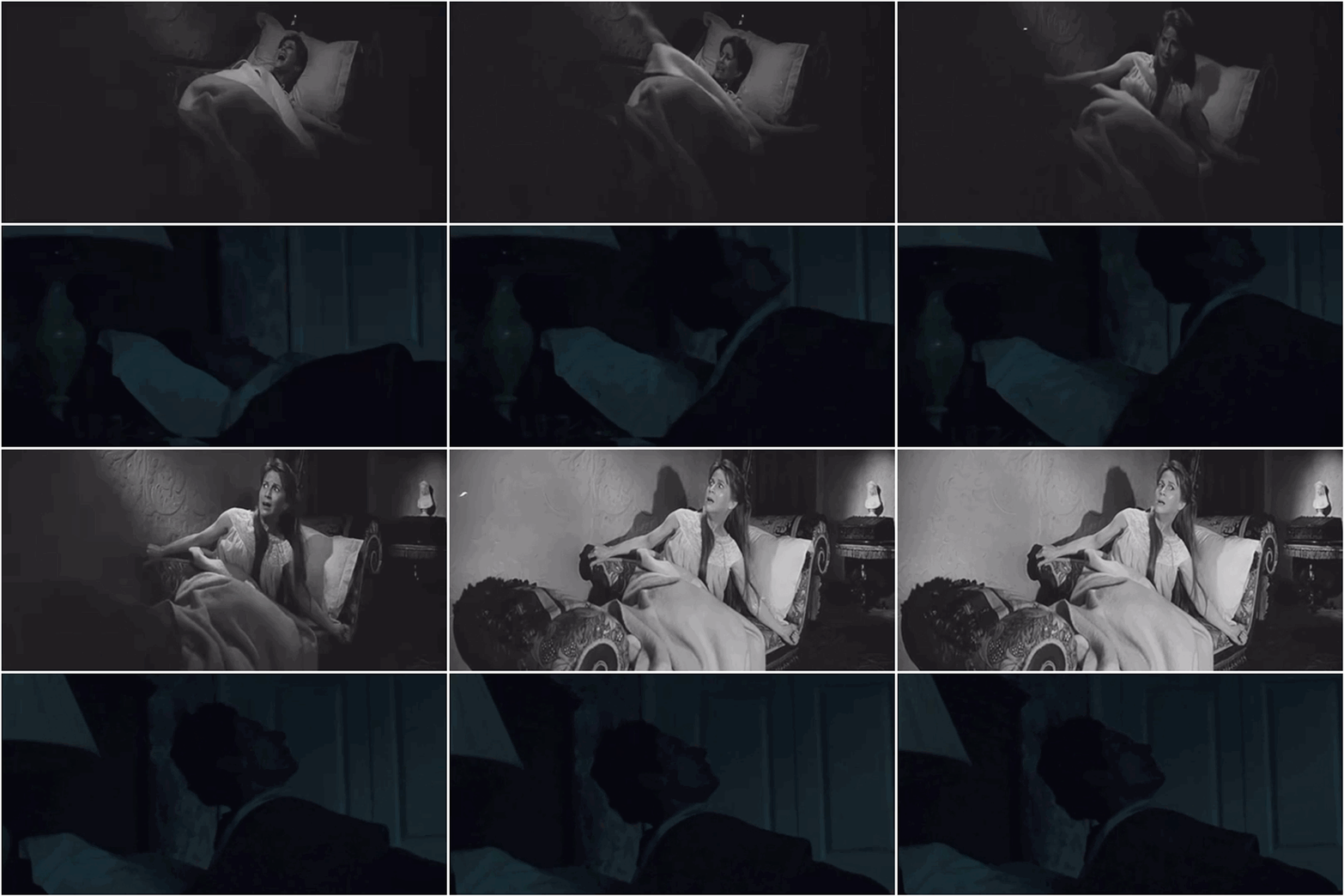
Probably the closest the film gets to a scary moment:
The Haunting / The Eternal Daughter
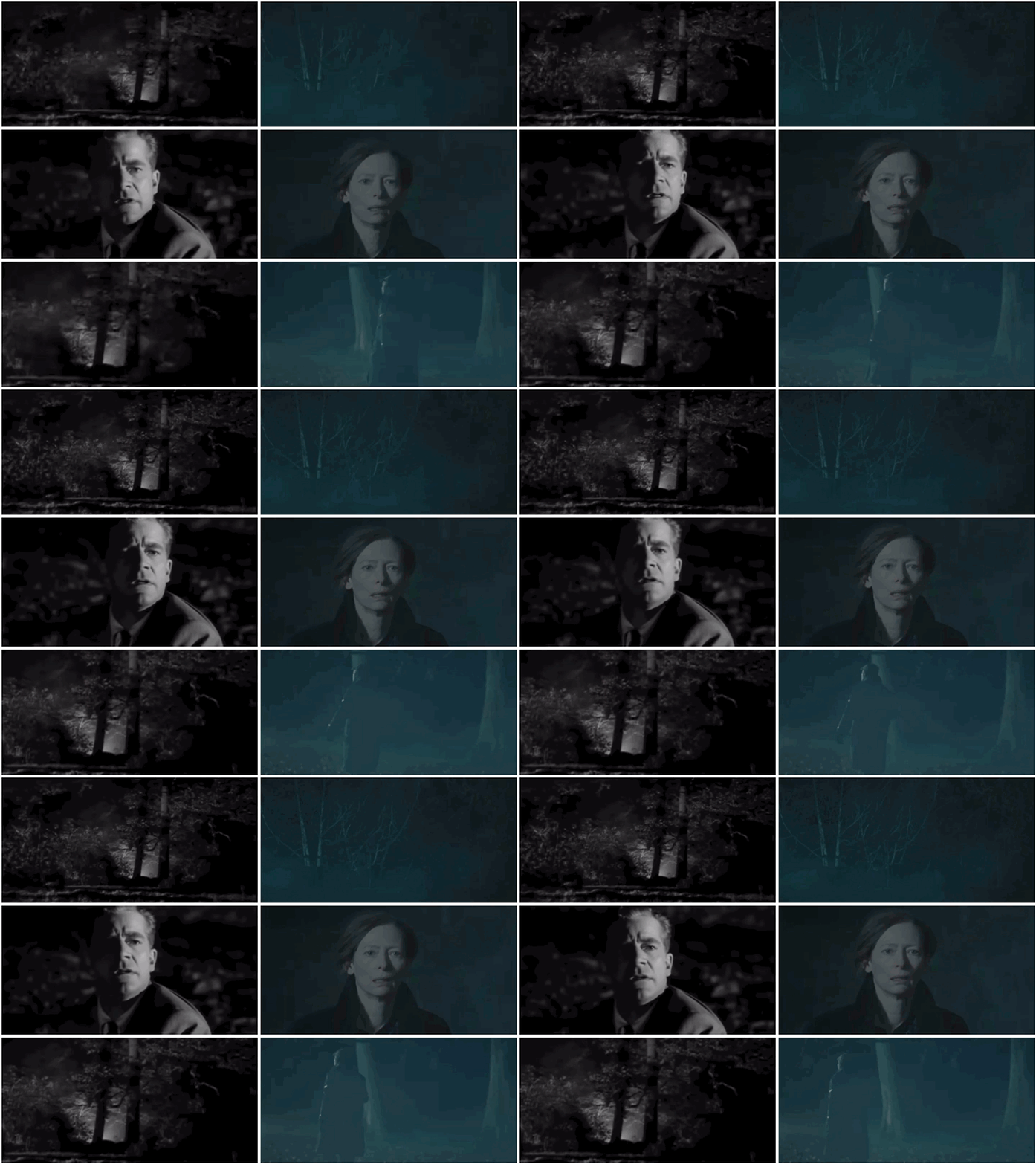
Even the final moments of The Eternal Daughter are right out of The Haunting.
Movies like The Eternal Daughter always fascinate me because while it is a masterful film (Joanna Hogg does an amazing job of mixing awkward humor & personal grief) - it’s really only made for a specific group of people. Not that there isn’t a market for small intimate arthouse films, but this is part of a series of films that you’d have to be familiar with in order to appreciate the entire saga (this might be my favorite movie of 2022 but I wouldn't blindly recommend it just anyone). I guess The Eternal Daughter can be enjoyed by anyone on a surface level. Who doesn’t love a simple yet beautifully executed ghost story? But if you’ve been invested in Hogg’s last few films (The Souvenir & The Souvenir II) then you’re part of that aforementioned group I’m talking about. This one is for us...
In this latest installment in the “Souvenir Cinematic Universe”, Joanna Hogg takes some of the characters from her previous two films and places them in a haunted hotel 30+ years or so after the events of the first two films. Julia is now an established filmmaker working on her latest project all while trying to take care of her widowed mother. The ongoing 35 year working relationship between Joanna Hogg & Tilda Swinton has always been very meta and The Eternal Daughter is no exception. Not only does Swinton play both Julia (a cinematic alter-ego of Hogg herself) & her mother, but she takes over the role that her real life daughter played in the previous two chapters.
There’s a lot of pushback against "cinematic universes" these days because Marvel has cornered the market on sequels, prequels & offshoots. There is some understandable fatigue towards superhero/comic book-based films. Marvel's impact on movie franchises is undeniable at this point (Lord Of The Rings, Game Of Thrones, DCU, etc etc). But the world of “arthouse” cinema has been doing this decades before the MCU was even a thought. Everyone from Francois Truffaut to Leos Carax have been crafting their own cinematic universes for decades. Claire Denis’ Beau Travail is a loose continuation of Godard’s Le Petite Soldat. Bruno Dumont has been making nothing but sequels & prequels for the last decade. I’m all for endless sequels & continuations if it brings on more movies like The Souvenir & The Eternal Daughter (it should be noted that Tilda Swinton carries the honor of being the only actress to exist in both the Marvel cinematic universe and the Souvenir cinematic universe).
Click here & here to read my additional thoughts on The Eternal Daughter
and then Jacques Tourneur’s Night of the Demon; the opening of that film was a huge influence - Joanna Hogg, Letterboxd
The Night Of The Demon / The Eternal Daughter
The Night Of The Demon / The Eternal Daughter
One film was Jacques Tourneur’s Night Of The Demon which is really atmospheric - Joanna Hogg, Rogerebert.com
The Night Of The Demon / The Eternal Daughter
The Night Of The Demon / The Eternal Daughter
The Eternal Daughter is bound to draw some obvious comparisons to The Shining (what modern film set in a haunted hotel with long unbroken shots of hallways isn’t?).
The Shining / The Eternal Daughter
The Shining / The Eternal Daughter
The Shining / The Eternal Daughter
The Shining / The Eternal Daughter
Those comparisons would be fair, but given Hogg’s deep love of Chantal Akerman, I’d say The Eternal Daughter borrows more from Hotel Monterey.
Les Rendezvoud D'Anna / The Eternal Daughter
Les Rendezvoud D'Anna / The Eternal Daughter
Hotel Monterey / The Eternal Daughter
The influence is already all over the previous Souvenir films…
Hotel Monterey / The Souvenir
I sometimes wonder if Akerman rubbed off on Kubrick in some subconscious way. There aren’t any ghosts in Hotel Monterey but there are some eerie moments that predate some of the imagery in The Shining…
Hotel Monterey / The Shining
The Eternal Daughter would be a nice ending to the Souvenir cinematic universe but I said the same thing about the Souvenir II and here we are with a new brilliant surprise chapter. Part of me feels like as long as Joanna Hogg is alive, there will always be the possibility of a new installment and I am totally fine with that.
It's the details that I love. You can say so many things in a story through the images... I like to show things in an original way, I like to push the forms of visual expression to their limit - Lynne Ramsay
Like the Cinema of Todd Haynes or Lodge Kerrigan, Lynne Ramsay is another example of quality over quantity. In her almost two decades of filmmaking she only has three features under her belt (along with a handful of shorts) but I still consider her to be a "veteran" (not a veteran in the same tier as a Michael Haneke or a Claire Denis, but her name certainly deserves to be mentioned alongside the likes of Andrea Arnold, Fatih Akin, Bruno Dumont, Carlos Reygadas & Apichatpong Weerasethakul).
Ramsay's work has been on a consistent personal heavy rotation for the last decade so this one is special. I also don't explore a lot of female filmmakers in this series. I know some of you may be tired of reading lines like what I'm about to write but, in my opinion, Lynne Ramsay is a unique female voice in the mostly male populated world of filmmaking (it's certainly nice that everyone is suddenly praising Ava Duvernay & Angelina Jolie for their directorial efforts, but it'd also be nice to see mavericks like Lucrecia Martel, Denis & Ramsay get the same kind of attention).
Enjoy...
Post traumatic stress
Every one of Ramsay's feature films opens right at the start of (or moments after) some tragic event seen through the eyes of the main character. These characters are always in a peculiar position in that they're directly/indirectly involved in these tragic events somehow.
At the beginning of Ratcatcher, James accidentally causes the death of his friend Ryan but because there were no witnesses around to see exactly what happened, he keeps it a secret and we watch the guilt weigh on him through the course of the film. Morven Callar opens with the title character finding her boyfriend's dead body just after he took his own life. Instead of alerting the police, family or friends, Morvern disposes of the body and tells everyone "he's gone" to which everyone assumes she means he's broken up with her.
And We Need To Talk About Kevin deals with the aftermath of a school "shooting" from the perspective of the shooter's mother.
We Need To Talk About Kevin
Morvern Callar
Ratcatcher
You Were Never Really Here
The (sometimes) complicated relationship between parents & children...
Calling the families in Ramsay's films dysfunctional would be too easy. "Complicated" feels like the right terminology (technically they're all dysfunctional but that word wraps things up a little too nicely for my taste). Complicated family drama has always been at the root of her work. One of her earliest shorts (Gasman) focuses on a man juggling two different sets of children.
At one point in Ratcatcher James' father slaps his mother but moments later you get the sense that this may have happened once or twice before and its just kind of how things are between them. The occasional slap isn't a relationship ender for his parents, you don't really look at the mother as weak or fragile for being hit, and neither James, his mom or his siblings are even scared of the father character (James' dad is also quietly an alcoholic but because he isn't a raging drunk, we aren't quick to label him as such). And at it's core, We Need To Talk About Kevin is about the complicated, sometimes tense relationship between mothers & sons.
Gasman
Gasman
Ratcatcher
We Need To Talk About Kevin
We Need To Talk About Kevin
You Were Never Really Here
Recurring shots
Morvern Callar / Ratcatcher
The Swimmer / We Need To Talk About Kevin
Ratcatcher / You Were Never Really Here
Ratcatcher / We Need To Talk About Kevin
Morvern Callar / The Swimmer / Ratcatcher
Ratcatcher / We Need To Talk About Kevin
Recurring setting: Christmas
Shane Black isn't the only figure in modern films who loves Christmas (note the same position of the tree in each shot)
Morvern Callar
Gasman
We Need To Talk About Kevin
Influences
Terrence Malick's influence on pre-Morvern Callar Lynne Ramsay was more than obvious. Besides all the sprawling shots of grassy fields & sunsets, she even went so far as to use some of the music from Badlands in Ratcatcher.
Ratcatcher/The Red Balloon
Ratcatcher/The 7th Continent
Ratcatcher/Hour Of The Wolf
We Need To Talk About Kevin/Andrei Rublev
Badlands (Malick) / Ratcatcher
But Ramsay's influences (both visually & stylistically) go beyond Malick or even cinema...
Ratcatcher
Little Buddah / We Need To Talk About Kevin
Ratcatcher / Kes
Drive / You Were Never Really Here
Taxi Driver / You Were Never Really Here
The Night Of The Hunter / You Were Never Really Here
The Red Balloon Badlands Ratcatcher
Andrei Rublev / We Need to Talk About Kevin
Womanhood
Whether she realizes it or not, Lynne Ramsay is a voice for women in film (even if a lot women aren't as familiar with her work as I'd like them to be). Without being cliche or predictable she addresses issues like motherhood (We Need To Talk About Kevin & Ratcatcher), "girlhood" (Gasman), and friendships between women (Morvern Callar) in ways no other active filmmaker does. Plus the actresses she uses are rarely ever "dolled up" or covered in make-up (there's a moment in Morvern Callar where the camera intentionally zooms in on Morvern's leg hairs and later on we see her armpit hair and "granny panties" as if Ramsay is intentionally breaking convention and showing a more natural/realistic side of women).
Gasman
Ratcatcher
Morvern Callar
Small Deaths
We Need To Talk About Kevin
The presence of children
With the exception of Morvern Callar, all of her films focus on children. Her young characters are usually faced with, or witnesses too, morbid events like the death of a young friend (Ratcatcher) or a school massacre (We Need To Talk About Kevin). Even when the events aren't morbid, her young characters are forced to grow up fast or accept certain things no child should have too (Gasman).
Black & White Town
Gasman
Ratcatcher
Small Deaths
We Need To Talk About Kevin
You Were Never Really Here
True stories & adaptations
All of Ramsay's work is either an adaptation of a pre-existing novel or, in the case of Ratcatcher, is set during a real event that plays as a backdrop.
We Need To Talk About Kevin
Morvern Callar
Ratcatcher is set during the 1973 Glasgow garbageman strike
Ramsay was originally supposed to adapt The Lovely Bones
Hints, implications & the unspoken
Sometimes all it takes is a look to get your point across and Ramsay's work is certainly an example of this. Subtle looks and not-so obvious body language is an incredibly understated quality in Ramsay's pre-We Need To Talk About Kevin filmography (the element of the unspoken is more than obvious in Kevin given Ezra Miller has an evil sinister scowl or smirk on his face through most of the film and Tilda Swinton looks like she's on the verge of a nervous breakdown). All of Ramsay's early short films have little to no dialogue, and even if you were to miss the opening scenes of both Ratcatcher & Morvern Callar, you'd still be able to sense that James (Ratcatcher) & Morvern were sitting on some devastating news just by the looks on their faces...
This is such an important factor in Ramsay's work that you can even see it in the images used in the previous categories. Not Samantha Morton's face while sitting in the bathtub in Morvern Callar or the look on the young girls face in Gasman at the start of the "Womanhood" category






.gif)
.gif)


.gif)
.gif)


