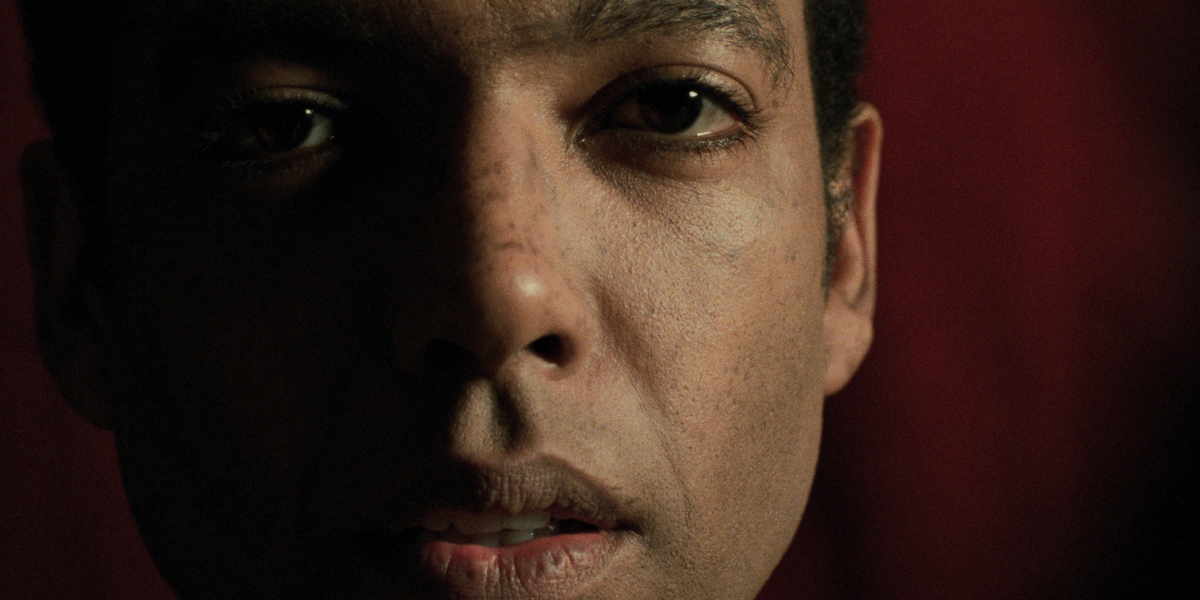
Last year I was recommended this film by my good friend Chris on an episode of The Pink Smoke podcast and I’m surprised I hadn’t heard of it before. This is truly a unique documentary that was ahead of it’s time. What makes Black at Yale so great is that it isn’t celebratory. Had this documentary about Black students at Yale university in the early 1970s been made by most filmmakers, it would have more than likely been a film celebrating the small demographic of Black students admitted to the college. It would have been seen a win. Instead, this documentary is a cautionary tale about the potential dangers of being “the first” or one of the earliest Black people to do something. This movie opened up a potential lane for more films to explore the negative side of being an early Black person to do something, but very few people went down that path. Instead - folks gravitated towards the stereotypical Christian-minded NAACP way of thinking where every early achievement by Black person is seen as nothing but a positive, and if you’re critical in any way you’re part of the problem. Sadly, this way of thinking continues to have a grip on Black folks now more than ever. If you don’t blindly celebrate every “win” achieved by a Black person then you’re a self-hating coon. And is it me - or does the “coon” insult no longer have the sting it once had? Nowadays, “coon” means everything and nothing at the same time. You vote Democrat? You’re a coon. You identify as a Black conservative? You’re a coon. You’re Black with a white spouse? You’re a coon? See what I mean? Anything can make you a coon at this point.
Anyway…
Getting in to Yale in the early 70s as a Black student is truly a major accomplishment. But once you get past that, you realize that you’re very isolated with little to no support or community. That kind of stuff matters. Especially back then. This is what the documentary hammers home. The film focuses on a few specific Black Yale students and their experiences on campus. From the jump you can see the mild depression in the students as they talk about their somewhat disappointing time on campus. Naturally they experience things like racism but that’s that not even the worst part. It’s racism and discrimination combined with being alone. In the south, if you experienced racism and bigotry as a Black person you still had a community of your own to fall Back on. In New Haven Connecticut, there were only so many Black people there at the time. And the Black locals with no affiliation to Yale would sometimes delineate from the few Black Yale students out of misplaced spite. So they’re facing forms of opposition from all sides. This is incredibly unique to me because there has always been this slightly inaccurate portrayal of this “all for one” mentality when it comes to the Black struggle when in reality there were many internal opposing civil wars going on between Black folks during and after the civil rights movement.
The problem is, the cautionary or overly critical Black folks that want to assess a situation before going all in are usually portrayed as "the problem" and are grouped in with the true snakes and sellouts within the Black community which is just unfair.
Black at Yale / Chameleon Street
What’s most fascinating about this movie is that one of the subjects of this documentary isn’t actually enrolled in the college as a student which is a whole separate unique story in itself. I’m surprised Black At Yale isn’t paired with Wendell B Harris’ Chameleon Street more often. Not only is Chameleon Street based on a true story, but one of the chapters in the film involves the main character pretending to be a student at Yale. The fact that this has happened twice in life is kind of amazing to me.
Black at Yale speaks to my type of critical thinking. There are plenty of like-minded Black folks out there from all generations that would connect with this underseen gem of a film which is now on YouTube for free…
Back in 2021 I had the pleasure of interviewing Wendell B Harris thanks to the great folks at Alta Journal (click here to read).
Below is the (mostly) unedited audio of our conversation. This was (and still is) a big deal for me. I thought you guys would enjoy hearing our conversation (this interview was always intended to be a written piece so the audio isn't as good as my other interviews).
I know I'm not the first person to bring this up but...How do you go from being a grand jury prize winner at Sundance (during a time when that actually meant something) among a talent pool of directors like; The Coen brothers, Spike Lee, Hal Hartley and Todd Haynes to essentially becoming just a cult figure among snooty Black American film snobs and Steven Soderbergh (probably the only prominent figure in Hollywood that has kept Harris' name relevant)? People make all this fuss about the return of hermit filmmakers like Terrence Malick and Monte Hellman but at least they have more than a few films to show for. All Wendell B. Harris has to show for in 22 years is Chameleon Street (an important film in many circles ranging from hip-hop culture to the cult film world). Sure he's got that cameo in Soderbergh's Out Of Sight as well as in Roadtrip (...???), but as a director he's only got that one movie (which is a classic if I might add). Of all the filmmakers to emerge out of that indie/Sundance scene in late 80's/early 90's, how is it that someone like Wendell B. Harris gets left behind? And I don’t mean to insult the man by using the term "left behind", but...it’s true. And it’s not his fault. How is it that during the mini-explosion of black filmmakers and films in the late 80's/early 90's that Wendell B. Harris was essentially “left out” and not included (similar to Charles Burnett). When you look at that famous New York Times Cover from 1991 on the New Black Cinema movement you notice Harris (and Burnett) are left out. I don’t get it. Not to sound like a child trying to start beef but in my opinion Harris and Burnett are much better filmmakers than more than half the people in the photo below (no offense but its true). I know Black directors like Harris and Charles Burnett have gained notoriety in places like Europe (which is great) but on a certain level their films weren’t really made for them (not to say Europeans can’t enjoy and/or love Chameleon Street, Killer Of Sheep, The Glass Shield, etc), but Americans (especially Black Americans) should be the real demographic to embrace these kinds of films.
Top Row (left to right) - The Hudlin Brothers (House Party), Ernest Dickerson (Juice), Mario Van Peeples (New Jack City), Mid Row (left to right) - Spike Lee (Jungle Fever), Matty Rich (Straight Outta Brooklyn), John Singleton (Boyz N The Hood), Bottom - Charles Lane (True Identity)
Had Hollywood/American Independent cinema reached its quota of Black directors? Was one or two more too much? Here’s something else that strikes me as odd: Similar to film movements like The French New Wave, New German Cinema and even Dogma, the Black American director explosion was about collaboration and/or helping each other out. Melvin Van Peeples (who still continues to direct) essentially passed the torch on to his son, Spike Lee put out Drop Squad and other films made by Black directors through his 40 acres & a mule production company, Ernest Dickerson moved on from being Spike Lee's cinematographer to becoming a director himself and actors like Samuel L. Jackson, Bernie Cassie and Sy Richardson made it a point to act in as many movies directed by Black directors as possible. Where was Wendell B Harris' support from the Black film community when he needed it? Hey, maybe hands were extended out to him and he didn’t want the help. I don’t know, Im just asking. Let’s face it…in the realm of "Black cinema" (a label I sometimes embrace and sometimes hate) Spike Lee was essentially the poster child. His films were popular, almost all of them were great (with a few exceptions like Girl 6) and so many filmmakers and films branched out from him. I’m not even basing this off opinion. That’s just how it was. And even when a Black director put out a film that had absolutely nothing to do with him he found a way to tie himself to it by starting some kind of “beef” (like he did with Matty Rich & Straight Outta Brooklyn). I wonder if Wendell B. Harris had to go through the B.S. of movie studios wanting his films to be more like Spike Lee after Chameleon Street was released (just like in Hollywood Shuffle how casting directors wanted all the Black actors to be more like Eddie Murphy). Maybe the powers that be in movieland didn’t realize that it was ok to have more than two or three prominent Black voices in cinema.
Sure, Chameleon Street is somewhat of an obscure/cult hit TODAY, but what about 20+ years ago? These days Wendell B. Harris is working on an on-going fiction/documentary hybrid about Roswell and Aliens which may never get finished (he's been working on it for YEARS). But I'm gonna be honest (and I think many of you aware of Harris’ talent can feel me on this) I'm not interested in a documentary about Roswell from someone like Harris who must have a lot more to say in terms of race, racial identity, society, etc. Just sayin'. Between Obama and the current state of Black music to Oscar Grant & Trayvon Martin, we need Harris' voice more than ever.
Judging from Chameleon Street and various interviews, Wendell B. Harris strikes me as a progressive thinking, rule breaking and hardheaded figure that would possibly clash with producers or studios. The film he planned to do after Chameleon Street was supposedly an off-the wall re-telling of Grease so I can imagine how that went over when trying to pitch it or getting funding. But even the hardest headed of maverick, rule breaking directors have gone on to make a name for themselves or have at least been given a few opportunities (Alex Cox, Donald Cammell, Lars Von Trier, Melvin Van Peeples, etc). Kinda like what I said in my write-up on Chameleon Street last year: If movie studios all over the world have tossed money at someone like Alex Cox, why not Wendell B. Harris? What was it about Harris that made studios and/or producers stay away and not wanna work with him? It looks like he’s the true S.D. Sallinger of filmmakers. This is something that really needs to be looked in to.
I know this title may sound like a porno (multi-FACIAL), but its actually a short film starring vin diesel about his struggles landing roles early on in his career because he looked either; "too white" or "too black". Not only did Vin Diesel star, write and direct the movie, but it was his first entry in to film, period. Sometimes rejection and frustration from Hollywood can cause a person to make their own path, which is what Vin Diesel did (whether you like his movies or not...which i personally don't). This movie ended up making the film festival circuit and ended up screening at Cannes. Steven Spielberg saw it and liked it so much that he cast Vin Diesel in 'Saving Private Ryan', and the rest is history. This blog entry is very rare, because i can almost guarantee you wont ever see Vin Diesel or Steven Spielberg's name mentioned in this blog again outside of a joke (although i did like 'Pitch Black' and 'Find Me Guilty' now that i think about it).
The reason I'm writing this is because a friend recently posted that viral video of Vin Diesel breakdancing as a kid. Every time i see that, i always wonder if people know how he got his start in movies. Don't get it twisted, after 'Multi-Facial' he went on to become a typical action star. I'm not using this blog to praise Vin Diesel's acting career or anything like that, but anyone i come in contact with never seems to realize 'Multi Facial' even exists. He wasn't some guy who just magically landed roles in 'Saving Private Ryan' and the 'The Iron Giant'. I'm also posting this because at a party this past weekend, i got in to a long talk about movies and race. When Michael Mann's 'Ali' came up in conversation, a friend pointed out something that i never even realized (and I'm almost in disbelief that i never thought about this until Saturday). The point he made was that it seemed when it comes time to cast a major role for a black person, they just look at what current black actor is available. There's never an attempt to "make" a new actor or take an unknown and transform him to 'Ali' (or almost any role for that matter). It has to be someone people already know. But take a role like 'Thor' (and many others). When Hollywood needed a Thor (or a new spiderman, or the dude from twilight, or a harry potter, etc) they go on a search for one and make one (naturally all of those actors had been in movies before, but never a MAJOR role). There are exceptions that we're all aware of like; robert downey jr. christian bale and michael keaton, but you get the point I'm trying to make.
Not only does 'Multi-Facial' go hand in hand with classics like; 'Hollywood Shuffle', 'Story Of A Three Day Pass' and 'Chameleon Street', but it actually shows a side of Vin Diesel that most people weren't unaware of. Even though All the movies i mentioned above deal mostly with racial issues concerning black people, any multi-racial actor or an actor that looked a different race can relate to it. From: Anthony Quinn - a legendary actor who's played everyone from a Latino to an Italian, to Victor Argo - a Puerto Rican icon of new york city independent film who was often typecast as an Italian in the films of Martin Scorsese (mean streets) and Jim Jarmusch (ghost god) to a Jewish person (last temptation of christ) to Lou Diamond Philips, who's probably played every single race possible with the exception of a black person and a white person in the 1980's alone, to even The Rock. And lets not forget women. In fact, with women it goes a lot deeper, because non-white female actresses with a race that cant be pinned down always seem to get that ridiculous "exotic" label. Jessica Alba is an obvious example of this. But lets not forget people like Rae Dawn Chong (the token light skin girl of the 80's who was always cast when it was still somewhat "dangerous" to put an actress with dark skin opposite a white male lead in a romantic relationship). After i watched Vin Diesel's short for the first time, i imagined this is what a lot of these actors went through.
'Multi Facial' also draws a lot of comparison to John Cassavetes's first film; 'Shadows' - the story of 3 siblings (2 brothers and 1 sister) who are all different shades of black. The oldest brother, who struggles with the same auditioning/rejection stuff that Vin Diesel does in 'Mult-Facial', is the darkest. The light skinned middle brother seems to struggle with his identity and light skin complexion the most, while the youngest and lightest skinned (who basically passes for white) sister, is dumped by her boyfriend when he discovers she is actually black. Also, all the films previously mentioned (shadows, Hollywood shuffle, multi facial, the story of a 3 day pass and chameleon street) share the same rawness and have the same "rough around the edges" feel, but still get their point across. All of those movies are also directorial debuts.
The 3 sibling in 'Shadows'
'Hollywood Shuffle'
Wendall B Harris paints his daughters barbie black in 'Chameleon Street'
Vin Diesel auditioning for the part of a stereotypical Italian in 'Multi-Facial', which he doesn't get, because he looks "too black". In the film he also loses a role in a beer commercial because the actors are supposed to be black, and he's told he looks "too white". In fact, he doesn't even get to audition. He's stopped at the door by the casting agent at first sight who informs him that he looks to light. He also auditions for the part of a Latino as well.
My only issue with Mr. Diesel is that after his career took off, he never seemed to revisit or work in any more movies that dealt with racial issues (unless I'm forgetting something). Anyway, this is an interesting short film. Yes the acting the is VERY rough, and theres a scene where Vin Diesel raps which will make you wanna look away and cringe, but its definitely worth checking out (below). It's nothing new, but given Vin Diesel's filmography, you wouldn't expect something like this from him.
There's cult status and then there's obscurity. Wendall B Harris' award winning film Chameleon Street - the amazing true story of Detroit conman William Douglass Street - seems to teeter between both categories (although Obscure or not - this is still one of the greatest films to show the Black experience). On one hand, the movie maintains its cult status through screenings at arthouse & independent theaters all over the world. In the last year alone, the Brooklyn academy of music has single handily kept this movie alive in New York City. The film is also very popular among the non-fickle, non-tyler perry black film community as well. Chameleon Street also gained a newer, younger audience ("the hip-hop generation") due to Blackstar (mos def & talib kweli) sampling a famous scene from the film on their debut album.
But Chameleon Street is slowly slipping in to obscurity as the DVD is now out of print (but there are some used DVD's in circulation). And what makes the film's legacy even more obscure is that Wendall B. Harris has yet to direct another film thus making him more "irrelevant" & less "fresh" in the world of cinema. It's very suspect that a Black director who wins the jury prize at Sundance never had the opportunity to make another film in over 20 years. Were his ideas too unconventional & challenging? Was his attitude too independent? Has he been blacklisted by the movie industry? Does he have an ego that makes him difficult to deal with. His career as a director seems to mirror that of of Alex Cox who once had a promising start with Repoman & Sid & Nancy, but because of his independent/D.I.Y. attitude, he can't seem to get a film financed to save his life these days (and when he does its...Repo Girl). But at least Alex Cox was given numerous opportunities to fail. Harris never got a single opportunity to fail. You can call Black people sensitive & paranoid when it comes to race & racism but when you take the career of Wendall B Harris - you have to agree there is at least a case for some possible funny business on the racial side of things...
On a sidenote - 1989 was an amazing year for independent film. Even though it marked the year of John Cassavetes's death (which was a major blow to American independent film), indie film still brought us; Drugstore Cowboy, Mystery Train, Unbelievable Truth, Do The Right Thing& Sex Lies & Videotape, which are not only some of the best movies of the 80's, but they also ushered in the 90's American independent movie renascence. Most of the directors, actors & writers associated with the aforementioned films went on to some form of greatness while Chameleon Street and its director faded away in to semi-obscurity. In fact, Harris' peer; Steven Soderbergh seems to be the only person to keep his name alive (Soderbergh cast him in Out of Sight)...
Harris' cameo in Soderbergh's Out Of Sight
Steven Soderbergh has been an advocate for underrated/underappreciated Black filmmaker for years...
Bill Duke's cameo in The Limey
Soderbergh helped get the word out on Killer Of Sheep
Harris also had an unexpected cameo in Road Trip which I still find strange because I know the target audience for that movie had no idea who Harris is or how important he is in the world of indie/Black film...
The legacy of Chameleon Street is becoming so forgotten (by certain specific so-called important movie publications) that it isn't even acknowledged as being one of the most important films in the "modern black film canon" (Slate recently published a list of the 50 most important Black films and they not only excluded Chameleon Street - probably the most important film that should be on that list - but other challenging films like Side Walk Stories, Black Venus, Symbiopsychotaxiplasm and countless others). It goes without saying that Chameleon Street is one of a kind and challenging (we'll get in to why towards the end of this write-up) but, in my opinion, influence goes a long way as well. Influencing other arts solidifies your importance on some level and it implies longevity because a piece of your work has rubbed off on future films...
Will Smith referenced the rubix cube scene from Chameleon Street (L) in The Pursuit Of Happiness (R)
Mos Def & Talib Kweli's sampling of one of Chameleon Street's most famous scenes...
Chameleon Street also references older important (BLACK) films that came before it (this is important because it makes Chameleon Street an abstract/subconscious lightweight history lesson in modern Black cinema)...
Chameleon Street/Black Girl
Chameleon Street/Black Girl
Addressing the camera directly: Chameleon Street/She's Gotta Have It
In Chameleon Street Wendall B Harris plays conman William Douglass Street. Street managed to successfully portray a doctor, lawyer, sports journalist and he even took the identity of a Yale student. Imagine Catch Me If You Can but only better. Chameleon Street is slightly more original than the average biography/biopic because the film was made in such a non-traditional way (it's both gritty and dreamlike/slightly off-kiltered at the same time). Harris touches on everything from racism & class to depression & identity (specifically within Black males, which is something that's pretty rare).
The lead performance, the writing & the overall atmosphere (which is an almost indescribable combination of eeriness and dark humor with creepy voice over narration) makes it stand out among so many other movies concerning the complexities of race.